Geometric and pattern coloring pages
These geometric coloring pages are all-over patterns: honeycomb hexagons, nested triangles, an optical-illusion cube pattern, a spiral of rotating squares, overlapping circles and abstract waves. They're free to print, and because every shape repeats, you can make each page look completely different with a new color scheme.
Updated 2026-11-11
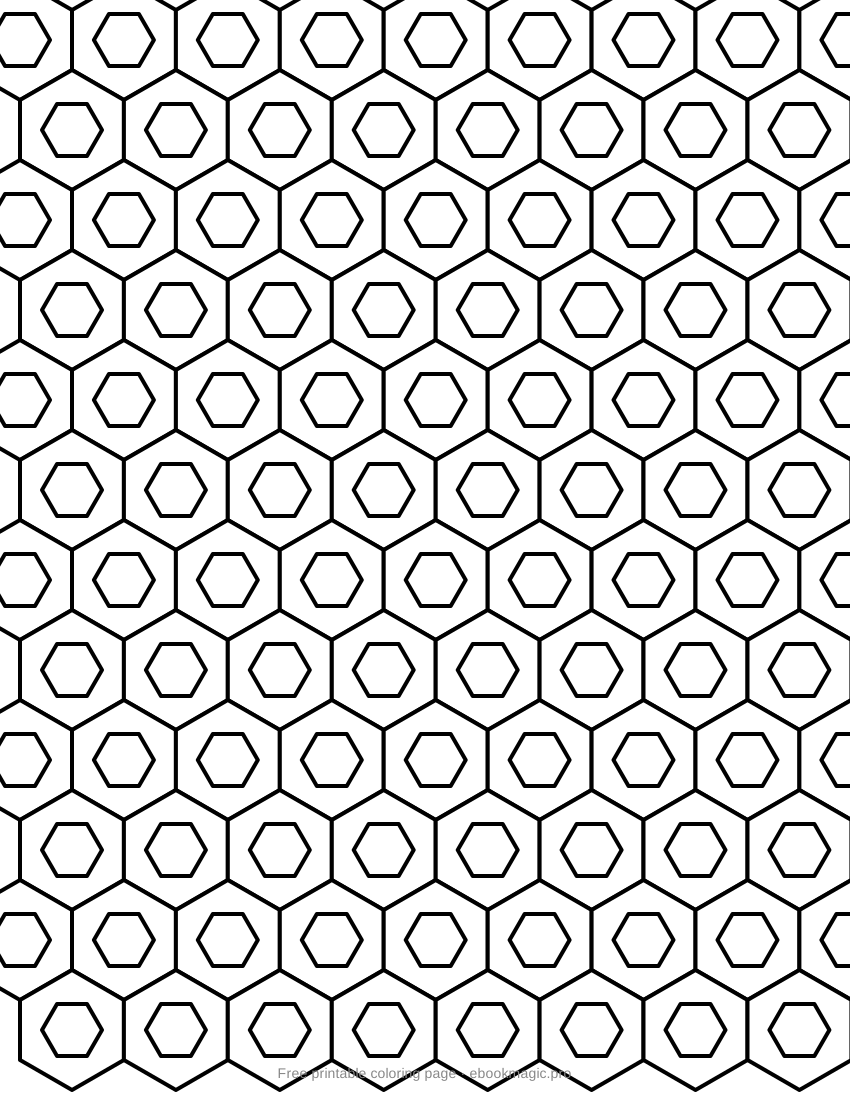
Hexagon pattern
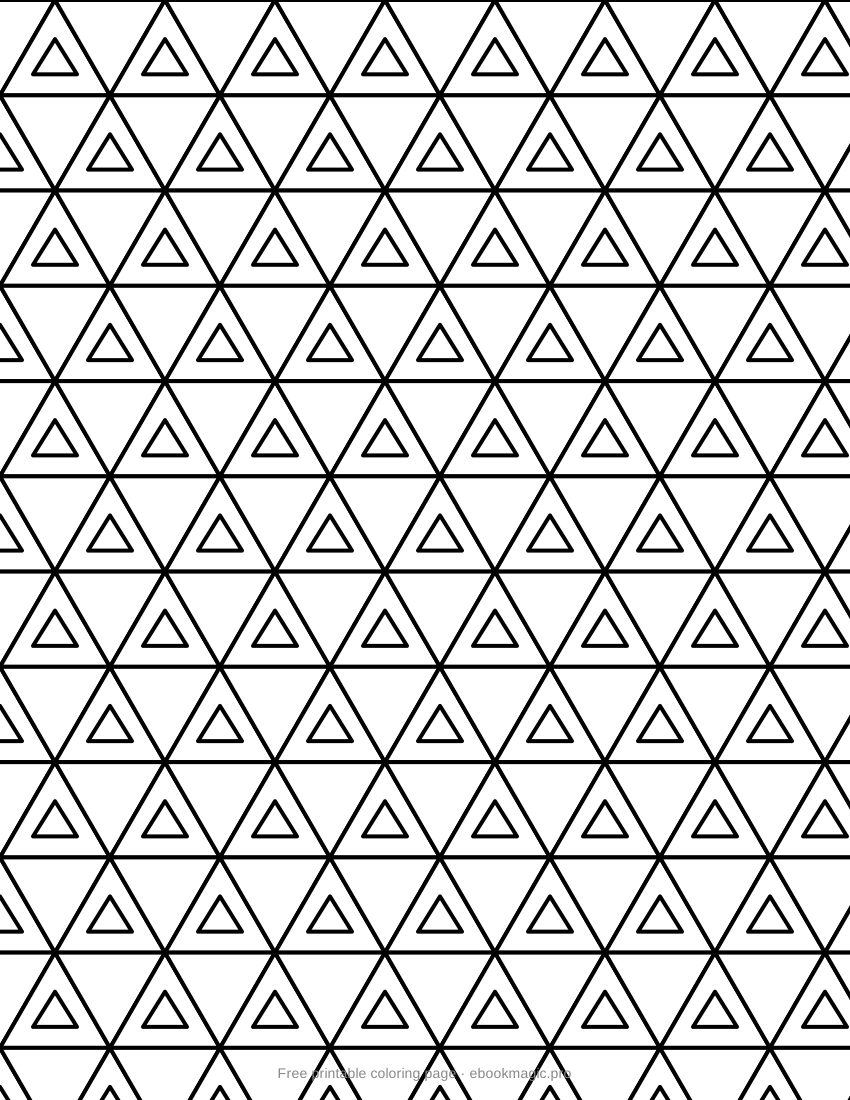
Triangle pattern
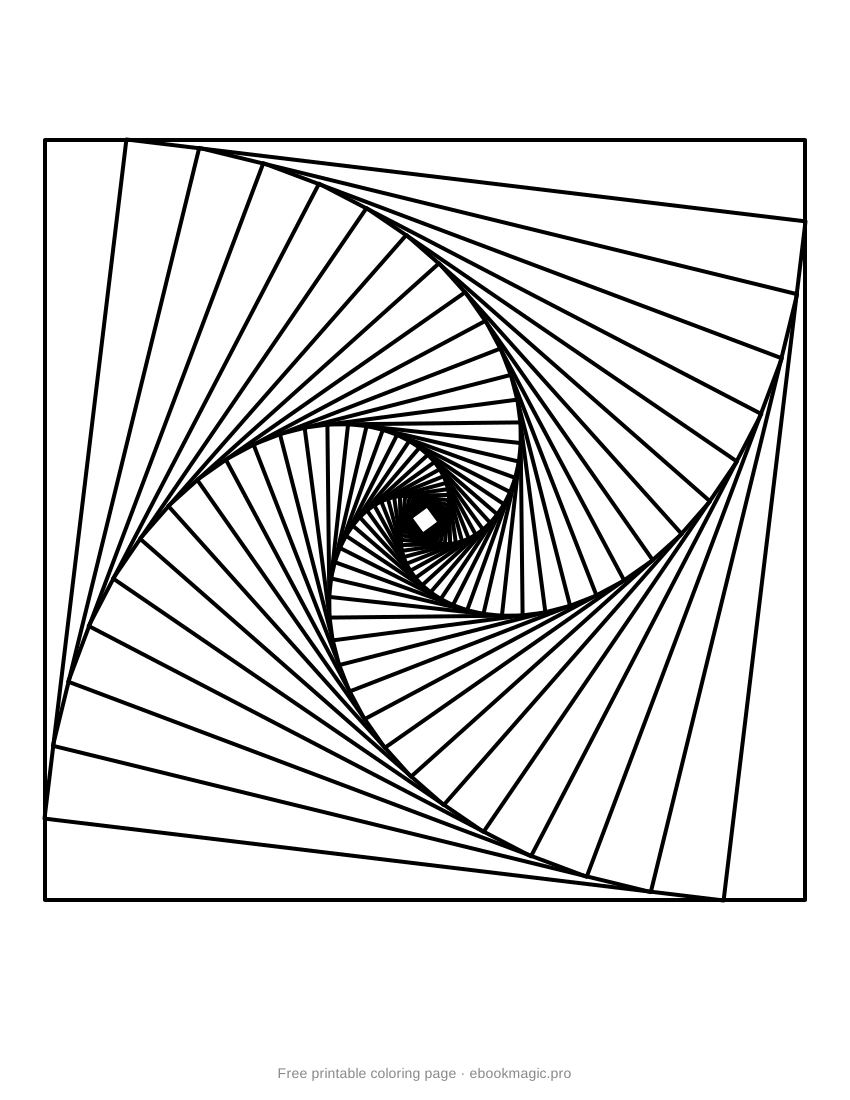
Square spiral
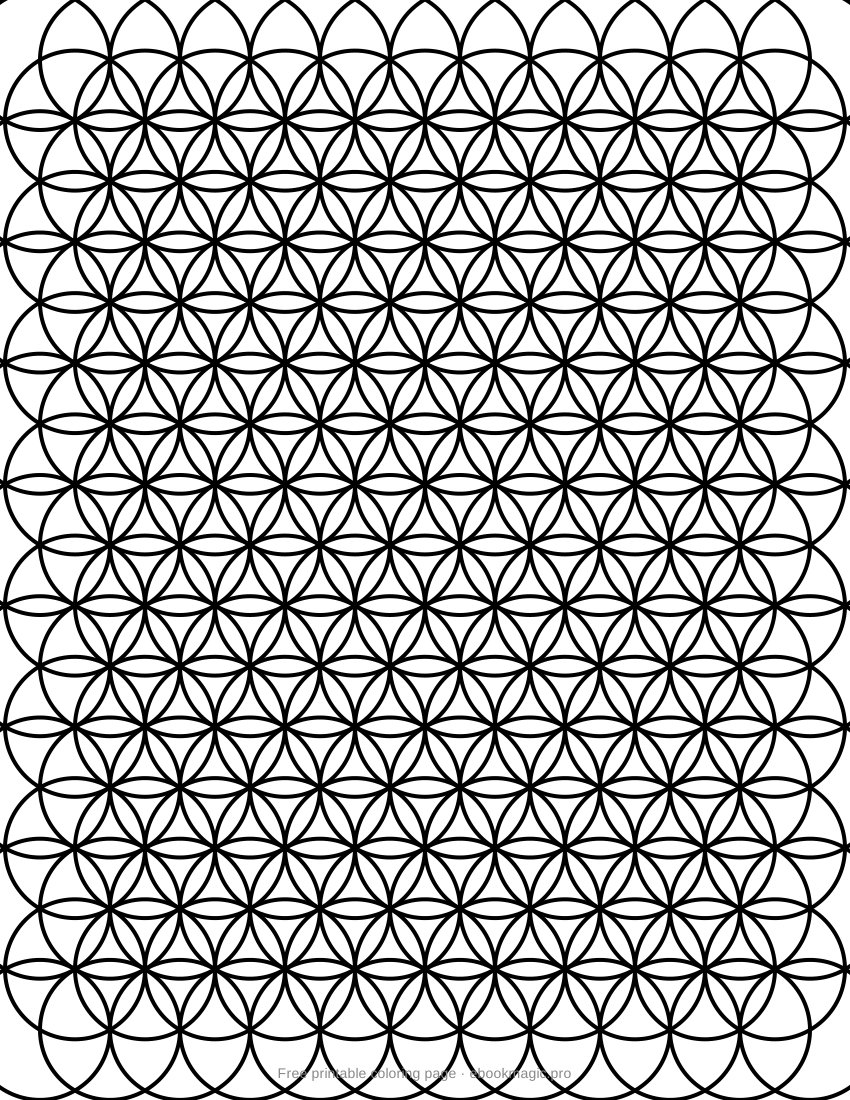
Overlapping circles
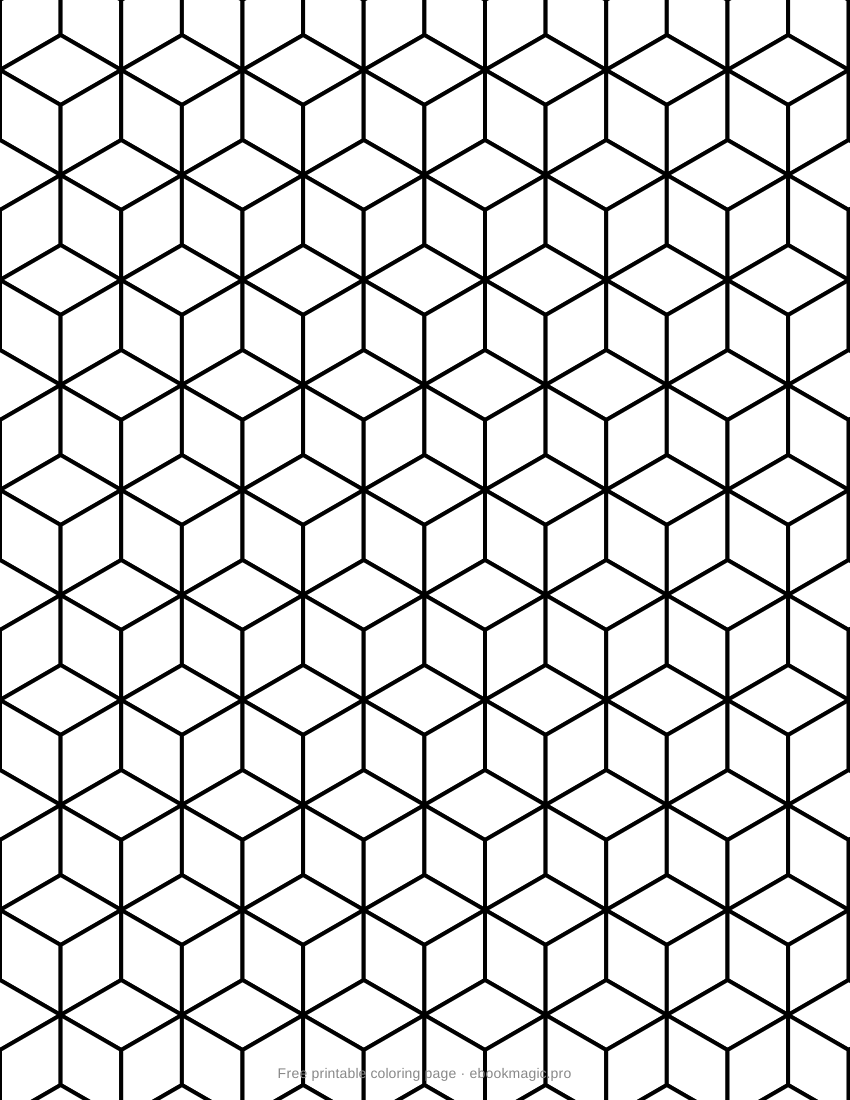
Isometric cubes
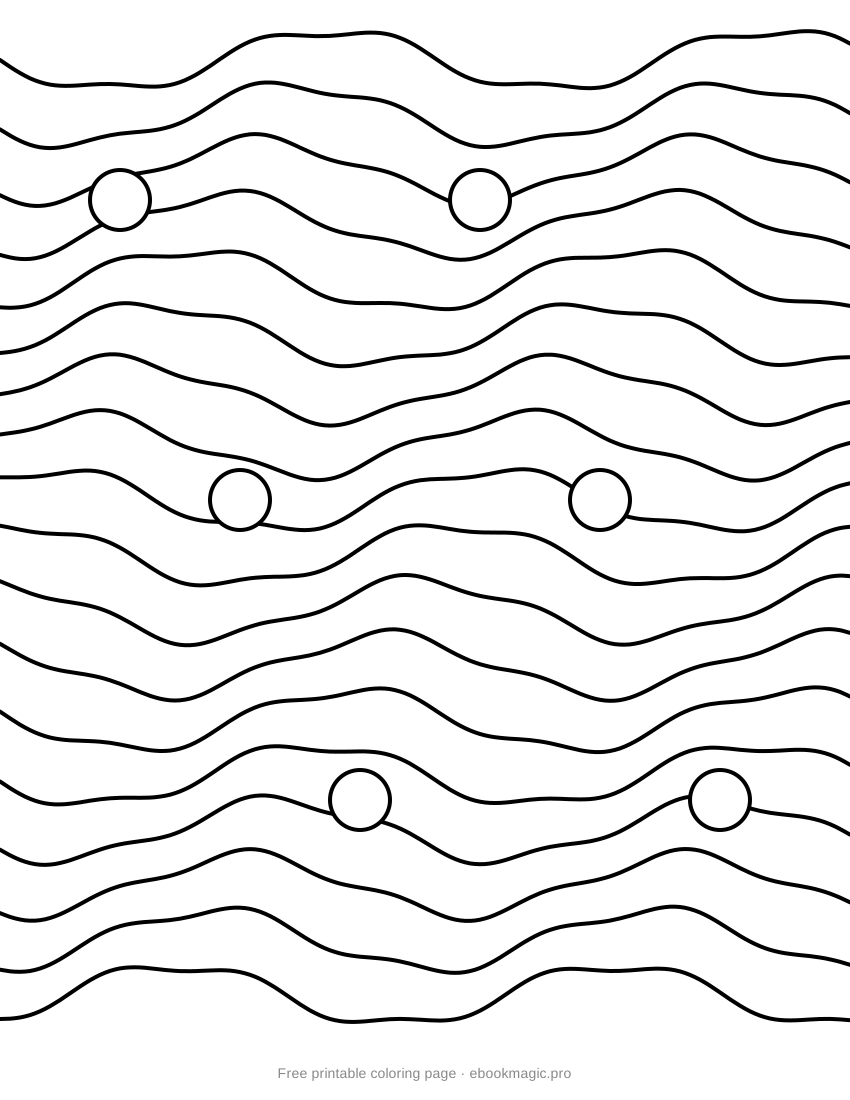
Wave pattern
Why color geometric patterns?
Geometric pages are a favourite with teens and adults who like order and symmetry. There's no picture to get "right", so you're free to experiment with color: try a gradient from one corner to the other, a checkerboard of two colors, or shading that makes the shapes appear to rise off the page.
In classrooms, pattern pages are also a gentle way into maths. Students can spot tessellations, count sides and angles, and see how shapes fit together without gaps.
Ideas for each pattern
- Hexagons: color them like a honeycomb, in yellows and ambers, or in rainbow rows.
- Triangles: alternate light and dark to make bold zigzag stripes.
- 3D cubes: use a light, medium and dark shade of one color on the three faces to create the illusion of stacked blocks.
- Square spiral: color each rotating square a slightly darker shade to create a tunnel effect.
- Overlapping circles: shade the petal shapes where circles cross to reveal flowers.
- Waves: use ocean blues, or sunset oranges and pinks, for an abstract landscape.
Color theory in a nutshell
Complementary colors, which sit opposite each other on the color wheel, such as blue and orange, create vibrant contrast. Analogous colors, which sit side by side, such as blue, teal and green, feel calm and harmonious. Geometric pages are the perfect place to test both, because the shapes are simple and the color does all the work.
Pattern pages in the classroom
Geometric coloring pages make easy early-finisher activities and calm starts to a lesson. In maths, students can identify the shapes on each page, count how many meet at a point, and talk about why hexagons, triangles and squares tessellate while circles leave gaps. In art, they can explore warm and cool colors, or create a gradient across the page. Because there's no right picture, every student's finished page looks different, which makes a striking classroom display.
Printing tips
Click Print to open a sheet in a new tab, then use your browser's print command and choose "Fit to page". The pages are vector images sized for US Letter, so they also print cleanly on A4 without blurry lines. Patterns run close to the edge of the page, so check that your print settings don't crop the margins.
Make a whole coloring book
Pick the Coloring Book genre, describe a theme, and EbookMagic illustrates it in line art and exports a print-ready PDF.
Make a coloring bookQuestions people ask
- What are abstract coloring pages?
- Abstract pages use shapes, lines and patterns rather than recognisable pictures. The waves and spiral pages here are good examples.
- Are geometric coloring pages good for kids?
- Older children enjoy them, especially the hexagons and triangles, which have medium-sized shapes. They're also useful for teaching shapes and tessellation.
- How do I make the cube pattern look 3D?
- Color every top face the lightest shade, every left face a medium shade and every right face the darkest shade of the same color.
- Can I use these pages in a maths lesson?
- Yes. Teachers are welcome to print them for classroom use.
- Do I have to color every shape?
- No. Leaving some shapes white or coloring only one shape in each group often looks more striking than filling the whole page.
More coloring pages
Keep exploring
- Bedtime stories
- Personalized books
- How to write a book
- AI story generator
- Short stories & fairy tales
- Writing prompts
- Book cover design
- Self-publishing guides
- Fantasy name generators
- Story ideas
- EPUB guides
- Personalized gift ideas
- Author marketing
- Reading guides
- Literary devices
- Poetry forms
- Story structure
- Card messages
- Free author tools